
Engineering the Upswing
A Sample Chapter

Background
When I was a graduate student (Francisco) at the University of Florida in the mid 1960s, I had the good fortune to have two wonderful mentors for my PhD in clinical neuropsychology. Dr. Paul Satz was my neuropsychology mentor, and through him, I was introduced to his good friend, Dr. Henry Pennypacker, a professor of behavior analysis. Both became co-chairs of my dissertation. My dissertation focused on how clinicians use information in their clinical decision-making. I also had the opportunity of sitting in on some lectures by Dr. Marvin Harris and was introduced to the field of anthropology. Looking in retrospect, I can now appreciate how blessed I was. I became very close to Hank Pennypacker; he was instrumental in helping me get my first job at the University of Houston’s College of Education. As time goes by and one continues with life, unfortunately, one tends not to remain in touch with people from one’s past. I was close to Paul, who died in 2010. He was a pioneer in developing the field of neuropsychology. I began thinking about Hank about the time the pandemic ended. I became nostalgic, called him, and we had a very long conversation catching up.
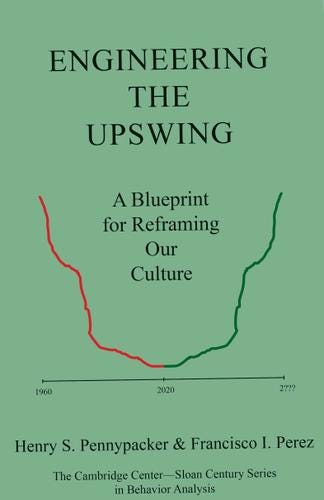
Hank had already retired from his many years of teaching as a Professor Emeritus. We decided to have weekly Zoom meetings. At the time, Robert Putnam had published his book The Upswing: How America Came Together a Century Ago and How We Can Do It Again (2020). Putnam, with his co-author Shaylyn Garret, concluded that the societal/cultural problems we are having are behavior-driven. Since Hank’s and my training focused on behavior analysis and modification, we decided to write our book. That is how Engineering The Upwing: A Blueprint for Reframing Our Culture (2022) came to be. I met Faris through Hank, and now we carry the tradition. The following is the first chapter of our book. It is a good introduction to what we can accomplish when we work together.
Chapter 1: The Times, They Are A’Changing - Bob Dylan
There’s Something Happening Here - What it is ain’t Exactly-Clear For What is Worth
-Stephen Stills & Buffalo Springfield-
Putnam and Garrett (2020), in their book The Upswing, document the significant cultural changes in the United States over the last century. It is a meticulously researched and well-documented collection of powerful longitudinal data that documents the cultural evolution of the United States since the Gilded Age of the late 1800’s. They concluded, “The story of the American experiment in the twentieth century is one of a long upswing toward increasing solidarity, followed by a steep downturn into increasing individualism. From “I” to “WE”, and back to “I” again.
In their book, they “examined how economic inequality, political polarization, social fragmentation, cultural narcissism, racism, and gender discrimination each evolved over the course of the last 125 years - not merely the last fifty.” They concluded that the up and down swings of communal solidarity are constructed by “human agency.” The fact that individual and collective behavior has brought us to where we are caught our attention. As Putnam and Garrett (2020) noted, “Change, whether for the better or for the worse, is not historically inevitable.” We propose that change can be managed. The government tries to do so by enacting laws, issuing executive orders, and pursuing well-intentioned public policy. Most of us would probably agree that they often get a failing grade. Little changes are made, and past mistakes are repeated.
As students of the science of behavior, we agreed that there was something here, but our initial discussions were not entirely clear. We both agreed, after further reflection and discussion, that we now have a science of behavior that can be applied to guide the inevitable ongoing evolution of our culture intentionally. We need to heed David Wilson’s (2019) advice: “We are in a position to provide a scientific account of how the behaviors associated with goodness can triumph over the behaviors associated with evil - or vice versa - depending upon environmental conditions.” That is the main theme of this book. We hope that, if properly implemented, what we propose can guide us as we work to shape the evolution of our culture. The data tells us that it can happen. It is going to take some time.
The 1960’s
“Ask not what your country can do for you, ask what you can do for your country!” This rousing exhortation from John F. Kennedy’s January 20, 1961, inaugural address set a hopeful tone for the new decade in America. A brief period of national optimism followed. Remember Camelot. Then came the botched Bay of Pigs invasion of Cuba in 1961, the Cuban missile crisis of late 1962, and the events in Dallas in 1963. After the tragic assassination of Kennedy, Lyndon Johnson became president. He presented a vision of a Great Society, expecting that everyone could share in the opportunities and rights the United States offered for a better, more peaceful life. He proposed that the words ``liberty and justice for all” should have real meaning. In his vision of the Great Society, he initiated significant social programs, investing in education, supporting the arts, and making a strong commitment to civil rights and social justice. He had many legislative accomplishments, including the enactment of the Civil Rights Act of 1964, the Voting Rights Act of 1965, and the Civil Rights Act of 1968. He tried to withdraw us from the failed Vietnam War. All of these initiatives left him exhausted and wounded by the country that was becoming increasingly divided and fragmented. He chose not to seek reelection. Johnson’s primary goal was to eliminate poverty, inequality, and racial injustice. He presided from November 1963 through January 1969.
The civil rights movement, under the leadership and example of Martin Luther King, Jr. and others, made significant progress in the 1960’s. They were a group of grassroots activists who had a dream and engaged in peaceful activism. They conveyed their message and, through peaceful action, sought to push for change and new legislation, which led to the Civil Rights Act of 1964.
Inspired by the civil rights movement, other marginalized groups, including American Indians, LGBTQ people, and women, organized to push for change in discriminatory laws supporting unequal practices and pursue government support for their rights. César Chávez, who co-founded the Farm Workers Union with Dolores Huerta in 1962, is an example of a leader and activist of the time. Peaceful protest was the mantra.
The U.S., in an effort to maintain its position as a world superpower, became increasingly involved in the Vietnam War. This led to a steady cry of anti-war protests at home that eventually challenged the image of the U.S. as a united nation. Many protests occurred, most were peaceful, chanting “give peace a chance,” others not so peaceful, like the Ohio National Guard firing at the crowd of mostly students protesting against the war at Kent State University in Ohio. This occurred on May 4, 1970, killing four and wounding nine students.
The 1960’s also saw the assassination of John Kennedy in 1963, the assassinations, five years later, of Martin Luther King, Jr., and Robert Kennedy. Too much to handle. These cumulative actions made it clear that not all Americans shared the vision of a more inclusive and equitable democracy.
This tumultuous period in our national history was filled with both hope and promises, as well as plenty of disappointments. The Great Society began with a bang! Great vision, transformative ideas, major initiatives to change society’s cultural structures, and a commitment to investing significant money in education and other practices to expand opportunities and increase our accomplishments, united for the greater good. The biggest accomplishment was putting a man on the moon in 1969. That event united us, if only briefly.
We may ask ourselves what happened to all these legislative and government initiatives that spent a lot of our money promising a cultural transformation so we could live in harmony in a Great Society? In this book, we address many of these issues. The key is to focus on the teachings of Putnam and Garrett; we are where we are because of our individual and collective behavior. Our challenge is to focus on behavior change - individually and collectively- for the greater good.
Putnam and Garrett (2020) describe the sixties as “The Hinge of the Twentieth Century.” We were there, we felt it. We did not know what was happening, nor its long-term consequences. That is how culture evolves, unguided and mostly unnoticed. As noted by Putnam and Garrett, “trends move slowly in patterns that are less evident to contemporary observers…” They also note, “Almost all historians agree that a major historical turning point took place between roughly 1968 and 1974.” This period has been called a “revolution,” a “renaissance,” and the creation of a “new America.” The first half of the 1960’s has been called by many historians “years of hope,” and the second half, until the mid ‘70’s, “days of rage.”
Putnam and Garrett used many data sources in their research. One of the most palpable and meaningful to us was the use of songs and period music. They pointed out, “The shift was perhaps most obvious in the world of pop music, where the pivot from ‘we’ to ‘I’ was so visible and so quick that we can almost date it to the month.” They identified many great musicians and, through their lyrics, offered a narrative and public commentary on the period, calling for love, peace, and social justice. In some, there was also anger and disappointment.
Among the lyrics of the time, there is the 1964 composition of “The Times They Are A’Changing” by the great poet and 2016 Nobel Prize laureate for literature, Bob Dylan. A short-lived band, Buffalo Springfield, gave us, according to Rolling Stone in the November 11, 2016 issue, one of pop’s most-covered classic protest songs of all time - “For What It’s Worth.” The song was composed by Stephen Stills. The lyrics of this song resonate loudly, even now, “Something is Happening Here/What it is ain’t exactly clear.” We thank Bob Dylan and the Buffalo Springfield Band for writing the ideal lyrics for our purpose. We could not introduce the book’s topics any better.
The facts are that the 1960s were a challenging decade of hope, change, assassinations of prominent leaders, rage, and war. In the process, there was a major shift in the United States culture. Young people and other activists, mostly united, sought to expand the meaning of the American Promise. Their actions contributed to an unravelling of the national consensus and laid bare a far more fragmented society. One positive consequence has been that people from a wide range of ethnic groups have, in many different ways, sought to make U.S. society and culture more equitable. A worthwhile objective indeed.
Where we are now
The Democracy known as the United States of America is in serious trouble. In the past year, we have:
Coped with a pandemic that took in excess of 500,000 lives. Many of these lives were lost because some refused to believe the pandemic existed or to take recommended precautionary measures, such as wearing a mask, maintaining a safe distance from others, or becoming vaccinated when the opportunity arose. How we behave is a public health concern.
Endured an assault on the nation’s Capitol by a mob of angry citizens who had become convinced that a national presidential election had been fraudulently stolen. How we behave is a concern.
Saw an increase in demonstrations for racial justice, ignited in several cases by instances of cross-racial police brutality. How we behave is a concern.
Witnessed several mass shootings, some with racial implications. How we behave is a concern.
Observed widespread loss of trust in basic institutions: e.g., the press, government, science. How we behave is a concern.
Experienced increased political divisiveness to the point where basic civility is nearly absent across party lines. How we behave is a concern.
We have reached the point where some are seriously talking about dismantling the basic components of our representative democracy and reverting to some form of autocracy. They point to the failure of our institutions to live up to the founding fathers’ devotion to the ideals of liberty, equality, and justice for all. They assert that the failure to achieve these ideals in the present justifies rejecting past progress. This reaction is tantamount to ignoring the uniqueness of the American experience, which Alexis de Tocqueville (1945) famously lauded in Democracy in America, for which millions of immigrants have sacrificed.
Putnam and Garrett (2020) abbreviate these changes as being from I-We to We-I. Thus, as noted earlier, they describe the 20th Century in America as following an I-We-I curve, an inverted U that peaks around 1960 and descends to the present day. Their book demonstrates that many socioeconomic and political indicators follow this pattern with alarming consistency.
Putnam and Garrett were not the first to recognize patterns of sweeping change in our culture. They cite Walter Lippmann’s Gilded Age (1914, 2015) and his book Drift and Mastery as anchoring the movement called Progressivism, which originated in the early 1900s. This was an era of great turbulence in America, brought on by massive immigration, industrialization, and political turmoil occasioned in part by events in Europe. “There isn’t a human relation, whether of parent and child, husband and wife, worker and employer, that doesn’t move in strange situations… We have changed our environment more quickly than we know how to change ourselves,” said Lippmann. Putnam and Garrett also cite Marvin Harris (1981), whose book America Now: The Anthropology of a Changing Culture documents, in prose, many of the ills that Putnam and Garrett present with quantitative data.
As noted previously, Putnam and Garrett (2020) chronicle in detail the changes in American life and conclude with a plea to return to the values of an I-WE society, but are unsure of the route to that objective. They note that between 1900 and 1960, science and technology supported the expansion of industry and the economy, alongside an ever-present sense of community. That national feeling reached its apex during World War II, when the entire nation was mobilized in one way or another to support the war effort. Following the war, innovations such as the GI Bill made education possible for returning warriors, and a period of social cohesion prevailed until the ‘60s. Then began the shift from I-We back to I-only, leading to the situation we find ourselves in today.
We need to look elsewhere to find the causes of where we are. Once we pinpoint the causes, we can look for ways to guide cultural change intentionally. We need to look where the science of behavior tells us to look: the environmental context that sets the occasion for our behavior. That is our present society and cultural environment. We also need to look at the environmental history of how we got here. Culture evolves, unguided and unmeasured; cultural evolution has brought us here. Looking closely at our individual and collective behavior in recent actions is an urgent place to start. To do this, we need to carefully analyze the factors (prevalent cultural contingencies) that create the context for our behavior. In this book, we will examine the challenge of how we behave, the context/environment in which we behave, and propose evidence-based behavioral technologies that offer hope for behavior change for the common good. Wilson (2019), an evolutionary scientist and proponent of developing practices for the intentional evolution of the culture, urgently warns us that evolution that is not intentionally guided (functionally changed) and monitored can produce unintended consequences. Here we are.
Fortunately, there now exists a science that has blossomed during the latter half of the 20th Century and has spawned technologies capable of returning the emphasis to an I-We communitarianism that has the potential to resolve many of our current cultural dilemmas. We now have a maturing science of behavior that can provide strategies and practices to reverse the decline and fulfill America’s ideals.
We will introduce the basic principles of this science in the context of evolution with emphasis on selection, natural or cultural, as the organizing theme. We will cite E.O. Wilson, Marvin Harris, Sigrid Glenn, and B.F. Skinner, Susan Schneider, David Sloan Wilson, and Anthony Biglan, among others, support the broad nature of the science. A key concept will be strategies for making benefits to the culture function as a reinforcer for individual behavior. If successful, that strategy will return the I-We character of our behavior from the I-only meme that is prevalent today.
Objectives and Proposals
Foundations
We are facing many problems. Most are a product of our actions. Some are social/environmental problems, like decreased cooperation, social injustice, violence, economic inequality and insecurity, subpar and unequal educational practices, health management and care inequalities, as well as implementation of ineffective applications of laws and social policies by the government that keeps using our money to repeat past mistakes with minimal progress in engineering practices for the greater good. We lack trust in our institutions and tend to fend for ourselves, with minimal cooperation. We rely on social media to make “friends” and miss out on real, bone-and-flesh friendships. We do not know how to resolve conflicts, and some resort to violence to settle their differences. Many work environments are also toxic: there is little work-life balance, high work demands, and low rewards. Many work cultures are highly toxic. We do not know how to slow down and enjoy leisure time. Drug and alcohol addiction are escapes from all of this for many. Relationships suffer. Families are broken. Children are abused and abandoned. Violence, including domestic violence at home, increases. Road rage occurs. And so on.
We also face many physical/environmental problems, such as global warming and human waste driven by consumerism, which are behavior-driven. Many of our chronic health problems, like cardiovascular disease, diabetes, and lung disease, are driven by our habits like overeating, cigarette smoking, drug and alcohol abuse, and other unhealthy practices. Mental health is a serious problem that is also plagued by inequalities in access and treatment.
Putnam (2000) has told us that we are increasingly bowling alone. We do not teach that prosocial behavior, such as being kind and expressing gratitude, is one of the best sources of personal reward and individual well-being. There is a need to focus on the root causes of many of these problems and to recognize that human behavior and the environment in which it occurs drive these events. It is our individual and collective behavior that has gotten us and kept us where we are. Putnam and Garrett (2020) are right when they point to human action as the driving factor contributing to the swings from we-I. We need to focus on our culture. Our society/culture is the environment in which we behave. They contain the rules and norms for behavior.
Most importantly, the cultural environment contains extensive contingencies of reinforcement, both explicit and implicit. They shape our behavior. You will learn more about how our environment/culture shapes our behavior and how we can learn to behave in ways that make a difference.
In this book, we lay the social and scientific foundation for our proposals. We follow the teachings of E.O. Wilson (1998) expounded in his wonderful book Consilience. In his book, he challenges us, “Today the greatest divide within humanity...is the chasm that separates scientific from prescientific cultures.” We need to apply the sciences, following the principles of “The Unity of Knowledge” Wilson has proposed, so that our culture evolves from prescientific to scientific. A science-based culture can evolve to benefit the greater good. We will rely on the natural sciences, primarily the natural science of behavior and the various social sciences. We lay the foundations for developing science-based engineered practices to guide the evolution of our culture. As does any evolutionary process, this will take time. We cannot afford to wait any longer, but we have to practice patience; we are so used to getting things now. David Sloan Wilson (2019), among others, has given us a framework for guided cultural evolutionary implementation. He has also warned us, and it is worth repeating, that cultural evolution is happening all the time; it has remained mostly unguided. If we let it continue as it is, we will end up with many unexpected consequences, some of which are frightening.
Proposals
Parenting: It is urgent to address healthy parenting. There are many types of relationships and circumstances today, many not very stable, that create the environment for the most important responsibility we have as parents - providing the best social and physical environment in which our children can develop a healthy brain, self-reliance, prosocial behavior, and become well educated. Home is where it starts. There is little guidance and support for this most important practice. We need to focus on finding practical approaches to this most pressing problem. The future survival of our culture depends on healthy parenting.
Universal early childhood education: The young brain depends on environmental input, both physical and social, for healthy development. We will explore the neuroscientific basis of cognitive and social maturation and, based on those data, propose an early childhood education system. The focus at this time is teaching with the brain in mind. Teachers need to be properly trained to implement these strategies effectively. Our culture must invest in this proposal if it is to evolve properly.
Redesign of the public education system: We will examine an improved educational system that incorporates advances in technology, including artificial intelligence, and pedagogy in recent years. That system will incorporate service through peer instructional involvement. The role of teachers as learning managers will be emphasized. Education should be considered the foundation and future of our culture. The survival of the culture depends on it.
Universal service requirement: We argue for universal service, as found in Israel and proposed from time to time in America, but never adopted after the draft was discontinued. We will also emphasize the role of service organizations such as Rotary, Lions, Kiwanis, etc., as well as volunteer organizations. Scott Geller’s work on actively caring will be featured.
Civics education requirement: We have a civics crisis. We call for the reintroduction of required civics courses at the elementary and secondary levels of education. The Center for Civic Education, as well as others we address in the book, provides quantitative data on the current pathetic state of civics education in the U.S. and makes the urgent case that civics education is needed. Lifelong participation in civic duty behavior will ensure the continuity of this needed cultural practice.
Immigration: We will propose an immigration analysis that includes support so that immigrants are able to learn English within a year of admission and learn the foundations of our history and civic principles. They need to become participants in our democratic and cultural process. We need to ensure their success through our actions and help them become We.
Politics and economics: We will discuss the role of government, including the provision and maintenance of cultural and environmental conditions that support individual success in a non-coercive, non-punitive manner. We will also discuss the effects of noncontingent reinforcement and its social consequences. The I-only nature of identity politics will, as Putnam and Garrett acknowledge, be discouraged. We will recommend science-based public policies that measure their effectiveness in achieving their intended objectives and make policy modifications based on the data, not lobbying interests alone. We encourage an economic system that benefits the most.
Healthy Work Cultures: We endorse adopting the National Institute for Occupational Safety and Health’s proposed Total Worker Health® initiative. In our view, this initiative is a guided approach to implement an evolutionary process in the work culture for the greater good.
Social Justice: Social justice, and specifically racism, have been revisited repeatedly in our recent national history. Many attempts, with good intentions, have been made to implement changes. It is an important, urgent issue that clearly needs our attention. The Civil Rights era brought so much promise that race relations were finally going to be resolved and fulfill Martin Luther King, Jr.’s dream of not being judged “by the color of one’s skin but by the content of our character.” Unfortunately, it has not fully happened, even though some good progress has been made.
We propose that social justice in general, and race relations and equality in opportunities in particular, will not be resolved easily by new laws or by negative reinforcement or punishment. It is a disturbing behavior pattern that, for some, has been reinforced by their environmental history and is now predictably discriminatory. That is what happens when the “invisible” cultural evolution is left unguided and unmeasured. For some, discrimination is a learned behavior. It will change if we implement and properly guide a cultural evolutionary process to address discriminatory behavior. As with everything else learned, it begins early at home and needs to be reinforced by long-term educational programming and the cultural contingencies in place. We will address this issue directly because, in our view, if we do not address it through engineered practices targeting the contingencies of reinforcement, maintaining discriminatory practices in some contexts will not change much. It is a complex issue with many variables that will require a genuine commitment to applying the scientific method to identify the factors that sustain inequality and discriminatory behavior, and to guide cultural evolutionary change. This process takes time. These issues, which are so muddled and ingrained, require patience and systematic implementation of practices to evolve the behavior of racial discrimination. In the long run, if we do not achieve equality in opportunities, we cannot be united.
Violence: These days, everywhere we look, there is some sort of violent behavior going on. Just watch the news. Mass shootings and killings, murders, spousal abuse, and the mistreatment of children. Road rage. Violence at work and many other forms of violent behavior. It is quite obvious that we have not learned to resolve our differences through meaningful conflict resolution practices. These, again, are learned behaviors. Violent behavior is also complex and influenced by many factors. It seems that we are, in some ways, failing to teach respect for life and love for others. The headlines and the government cry for gun control. Guns are blamed for the behavior. Guns and a lack of proper control are certainly a major issue that needs to be addressed. However, in our view, what we see is indicative of our cultural practices that contribute to violent behavior in some. Unless we approach and identify the environmental/cultural variables that contribute to violent behavior, we will continue seeing violence. Gun control alone is not going to stop it. We need to do more. Similar scientific approaches to the one proposed to address social injustice are needed.
Public Health: We propose that public health approaches to policy implementation and prevention incorporate the science of behavior into their analysis, practices, recommendations, and, most importantly, their implementation. Public Health policies have primarily focused on the physical health aspects of prevention, targeting physical health and diseases. Over the last 35 years or more, it has become apparent that it is, in many cases, our behavior and cultural practices that contribute to many forms of chronic disease. Public Health needs to take a leadership position in promoting behavior change for the common good. That includes social practices of hate and anger, as well as acts of violence and other forms of negative behavior. Public health scientists and practitioners need to become active facilitators and promoters of prosocial behavior, conflict-resolution practices, self-regulation, and other positive behaviors that enhance well-being and disease prevention. We propose that public health practices expand beyond a focus on physical disease and the current social disease model, and embrace the science of behavior to reinforce and expand evidence-based positive behavior practices that help us unite and live in harmony with one another. The country needs this type of leadership now, when negative and uncooperative behavior is so prevalent.
Charge
The assignment we have is urgent. It needs to be done together. If not, we will likely face the gradual, unguided, and unmeasured as well as inevitable cultural evolution of our country and wait for an unfortunate major event, like World War III, to unite us again, if we are lucky. Why leave it to chance? We know that we, united, are better!
References
The proposals we make in this book are based on documented and peer-reviewed research. As you read the book, you will notice that we have chosen to follow the format used in scientific endeavors: providing references that underpin our findings and recommendations. The references are listed at the end of each chapter.
Selection by Consequences
Throughout this book, you will read extensively about evolution, with a focus on behavior and cultural evolution. You will also read about the environment’s major role in shaping behavior. The following is an excerpt from B.F. Skinner (1981), from one of his most influential publications, Selection by Consequences, published in Science. We encourage you to read the whole article. It may facilitate reading and understanding this book.
“A proper recognition of the selective action of the environment means a change in our conception of the origin of behavior, which is possibly as extensive as that of the origin of species. So long as we cling to the view that a person is an initiating doer, actor, or causer of behavior, we shall probably continue to neglect the conditions which must be changed if we are to solve our problems” (Skinner, Science, July 31, 1981.)
If you are interested in purchasing the book, you can do so at the Cambridge Center for Behavioral Studies, www.behavior.org. All proceeds benefit The Cambridge Center for Behavioral Studies.
Thank you, and please pass it on.
Frank